
By Delucio LLC · Editorial standards
In one sentence: Dustless floor refinishing is sanding and refinishing a wood floor with machines connected to dust collection, so most of the dust is pulled away at the source instead of spreading through the house.
Key takeaways
- “Dustless” is a common name for sanding with dust collection, not a promise of zero dust.
- Captured dust means less settling on furniture, shelves, and nearby rooms.
- The finish result depends on the sanding and the finish, not on the dust system alone.
What Dustless Floor Refinishing Means in Practice
The word dustless describes the equipment more than the result. The sanders and edgers are connected by hoses to a vacuum and collection unit, which pulls dust away from the sanding surface as the machines move. Most of the fine wood dust ends up in the collector instead of in the air of your home.
Some dust still escapes, especially along edges, in corners, and when bags or filters are changed. A good contractor explains this before the work starts, so you know which rooms to close off and what to cover. Honest expectations make the day easier for everyone in the house.
How Traditional Open Sanding Differs
Older sanding setups used a cloth bag on the machine and little else. The bag caught part of the dust, but a large share of the finest particles floated into the air and settled across the house for days. Cleanup after a refinish often took longer than the sanding itself.
Open sanding can still produce a good floor, since the quality of the result depends on the sanding passes and the finish. The difference is what happens to the rest of the house while the work is underway, and how much dust you are still finding on shelves afterward.
Why Captured Dust Matters for Your Home
Fine wood dust and old finish particles are irritating to breathe, and they get into places that are hard to reach, such as vents, light fixtures, books, and electronics. Capturing most of it at the floor protects the rooms you are still living in during the project.
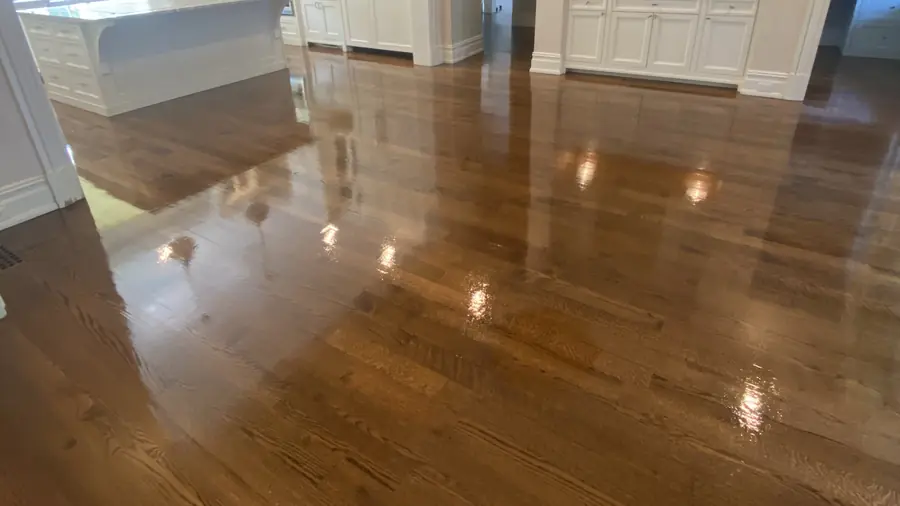
It also helps the finish. Less dust in the air means fewer particles landing on wet coats of stain or finish, which helps the final surface look smoother. Our hardwood floor refinishing service covers the full sequence from sanding to the last coat.
How to Prepare the House for Refinishing
Clear the rooms completely, including rugs, lamps, and anything on the walls near the floor. Close doors to rooms that are not part of the project, and plan to keep the heating and cooling system off or the vents covered during sanding if your contractor recommends it.
Plan for pets and children, too. They will need a separate space while the machines run and while each coat of finish dries. Ask how long each room will be off limits, so you can arrange meals, sleep, and the route through the house.
Does the Sanding Method Change the Final Finish?
The look of the finished floor comes from careful sanding passes, the stain choice, and the finish coats. Dust collection does not replace good technique, but it supports it by keeping the work area cleaner while stain and finish go down. Both methods still need the same attention to edges and corners.
If your floor only has light surface wear and you like the current color, a buff and recoat may be enough instead of a full sanding. Our hardwood floor sanding service explains when a full sanding is needed.
Questions to Ask Before You Schedule
Ask whether every machine, including the edger, works with dust collection, and how the crew handles corners and stairs. Ask which rooms should be closed off, how long the house should stay clear during finishing, and what you will need to do before and after.
Clear answers to those questions tell you more than the word dustless on its own. They also help you plan around work, school, and the rooms your household uses every day.
The Short Version
Dustless floor refinishing captures most sanding dust at the source, which protects the rest of your home and the fresh finish. It is not dust free, so preparing the rooms still matters. If your floors look worn, a free in-home estimate will show whether they need a full refinish or a recoat.
Next steps