
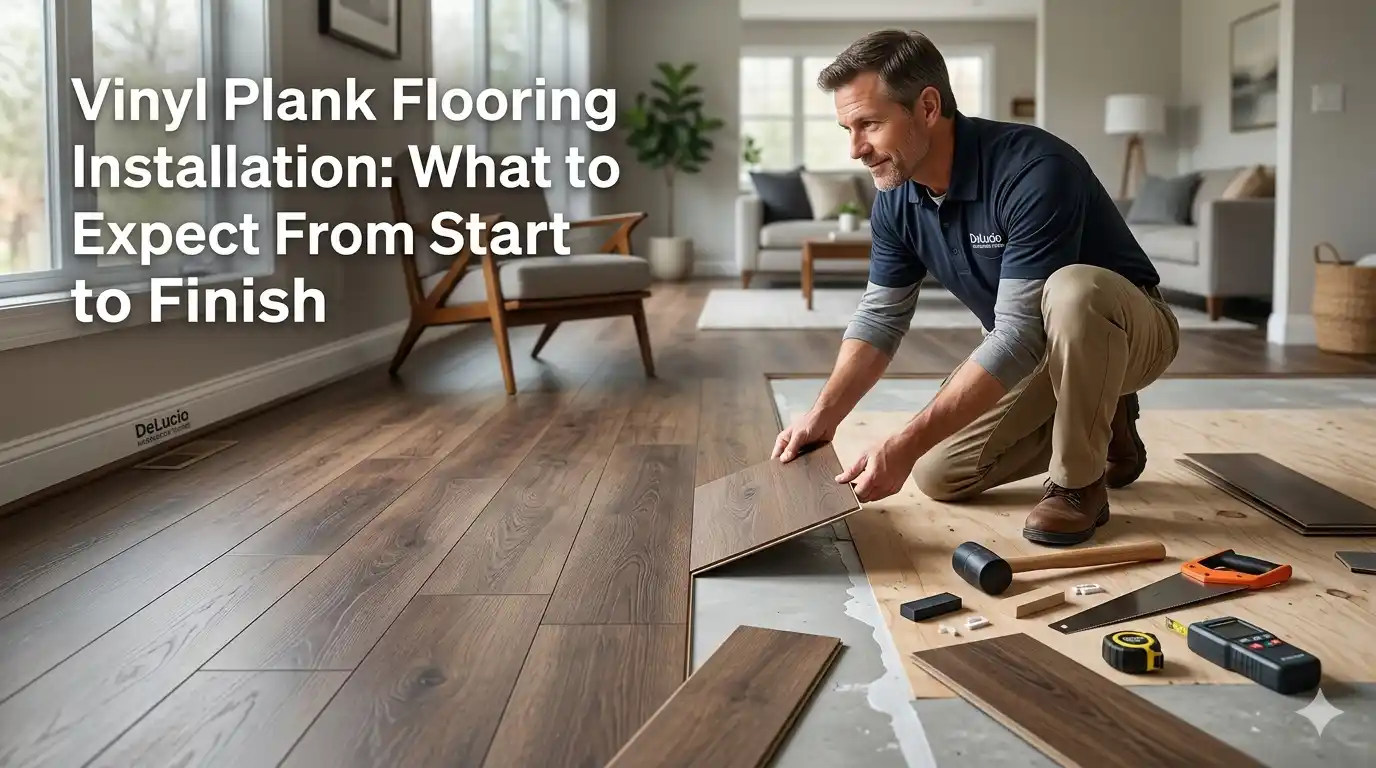
Understanding the Evolution of Modern Floor Surfaces in 2026
Choosing the right material for your home renovation is a significant decision that impacts your property value and daily comfort.
As we navigate 2026, many homeowners are shifting toward versatile solutions that combine aesthetic appeal with rugged durability.
Vinyl Plank Flooring Installation has emerged as the premier choice for busy households seeking a waterproof and scratch-resistant surface.
This process involves more than just laying down planks, it requires a strategic approach to ensure a lifetime of performance.
The modern landscape of interior design demands materials that can handle the unpredictability of life.
Luxury Vinyl Plank (LVP) mimics the organic textures of oak, hickory, and maple while offering technical advantages that natural wood cannot match.
When you partner with a professional flooring contractor, you gain access to high-grade underlayments and precision cutting tools.
Understanding the timeline and technical requirements of this project helps you prepare your living space for a successful transformation.
Preparation is the cornerstone of any high-quality home improvement project.
Before a single plank is clicked into place, our team conducts a thorough assessment of your existing substrate.
Whether you are dealing with a concrete slab or an old plywood subfloor, the foundation determines the final finish.
By sticking to a professional roadmap, you avoid common pitfalls like buckling or hollow spots that often plague DIY attempts.
Why Professional Luxury Vinyl Plank (LVP) Matters for Your Home
Homeowners often ask why they should hire a specialist rather than attempting a weekend project.
A professional installation ensures that the expansion gaps are perfectly calibrated for your local climate conditions.
In areas like Connecticut, seasonal humidity changes can cause materials to shift slightly over time.
Experts use specialized moisture meters to check the humidity levels of your subfloor before proceeding.
Precision is critical when working around complex architectural features.
Fitting planks around door jambs, kitchen islands, and floor vents requires a steady hand and specific mechanical knowledge.
Furthermore, the use of commercial-grade adhesives or high-quality floating systems makes a massive difference in sound dampening.
A well-installed floor should feel solid underfoot and remain silent when walked upon, regardless of the room’s traffic levels.
Safety and longevity are the primary goals of every project we undertake.
Modern vinyl products are often treated with antimicrobial coatings and UV-resistant layers to prevent fading from sunlight.
Professionals know which wear layers are appropriate for different rooms in your house.
For example, a high-traffic mudroom requires a thicker wear layer than a guest bedroom that sees minimal use.
Pre-Installation Phase: Preparing Your Space for Success
The journey toward a beautiful new floor begins weeks before the actual installation date.
One of the most critical steps is material acclimation, where the vinyl planks are stored in the room where they will be installed.
This allows the core of the planks to adjust to the home’s temperature and humidity, preventing future warping.
In 2026, we recommend at least 48 hours of acclimation for most high-end vinyl products.
Furniture removal and baseboard preparation are also essential components of the pre-installation phase.
We recommend clearing all personal items from the work area to provide the crew with a clean slate.
Existing baseboards may need to be carefully removed or supplemented with quarter-round molding to cover the necessary expansion gaps.
This attention to detail ensures a seamless transition between your new floor and your walls.
Remove all breakable items from shelves and tables in the work zone.
Ensure pets are secured in a separate area of the home to prevent accidents.
Coordinate a clear path for the technicians to move materials in and out of the building.
Evaluating Subfloor Integrity and Leveling Requirements
A floor is only as good as what lies beneath it.
Our technicians spend a significant amount of time inspecting the subfloor for dips, humps, or structural weaknesses.
Vinyl planks are flexible, meaning they will “telegraph” or show any imperfections in the subfloor over time.
Using a self-leveling compound or professional-grade sanding tools, we create a perfectly flat surface for the new material.
Moisture testing is a non-negotiable step for ground-level or basement installations.
Even though vinyl is waterproof, trapped moisture beneath the planks can lead to mold or mildew growth.
We utilize calcium chloride tests or electronic moisture pins to verify that the subfloor is within safe limits.
If moisture levels are too high, we install a dedicated vapor barrier to protect your home’s air quality and the floor’s integrity.
| Preparation Step | Description | Importance |
| Subfloor Cleaning | Removing all dust, debris, and old adhesive residues. | Ensures proper bond and prevents crunching sounds. |
| Leveling | Applying compound to low spots or sanding high points. | Prevents plank separation and joint failure. |
| Moisture Check | Measuring the relative humidity of the concrete or wood. | Prevents mold growth and subfloor rot. |
| Structural Repair | Replacing rotted plywood or securing loose boards. | Eliminates squeaks and provides a stable base. |
The Installation Process: A Step-by-Step Breakdown
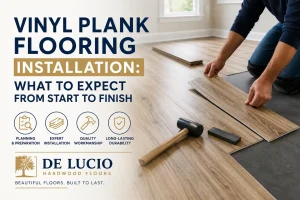
Once the site is prepared, the actual layout of the planks begins.
Starting along the longest straight wall usually yields the most aesthetically pleasing results.
Technicians use spacers against the walls to maintain the expansion gap required for the floor to breathe.
The first row is the most important, as it sets the alignment for the rest of the entire room.
Modern click-lock systems allow for a “floating” installation, which means the floor is not attached to the subfloor.
Each plank is angled into the previous one and tapped gently into place using a rubber mallet and a tapping block.
This mechanical bond is incredibly strong and allows for a smooth, unified surface.
We stagger the end joints of the planks to create a natural, “random” wood look that avoids repetitive patterns.
For areas prone to spills, like bathrooms or laundry rooms, we may use a perimeter sealant.
While the planks themselves are waterproof, preventing water from seeping into the expansion gaps adds an extra layer of protection.
This comprehensive approach ensures that your investment remains beautiful and functional even in high-moisture environments.
Post-Installation: Finishing Touches and Cleanup
After the last plank is cut and fitted, the project moves into the finishing phase.
This is where the transitions, T-moldings, and baseboards are installed to bridge the gaps between rooms.
Transitions are particularly important when moving from vinyl to carpet or tile, ensuring a safe and attractive threshold.
A professional finish means you won’t see any exposed edges or rough cuts.
Cleanup is a vital part of our service protocol.
We remove all scrap materials, sawdust, and packaging from your property.
The new floor is then thoroughly swept and damp-mopped with a manufacturer-approved cleaner.
This final walkthrough allows you to inspect every corner of the room and ensure that the work meets your expectations.
Install transition strips between different flooring types for a flush look.
Apply color-matched caulk around immovable objects like toilets or cabinets.
Perform a final inspection with the homeowner to guarantee satisfaction.
Long-Term Maintenance and Protecting Your New Investment
One of the reasons vinyl is so popular in 2026 is its low-maintenance profile.
However, a few simple habits can extend the life of your floor by several decades.
We recommend using felt pads on the legs of all furniture to prevent heavy pieces from indenting the wear layer.
Avoid using steam mops, as the excessive heat and moisture can potentially weaken the adhesive or the plank core.
Regular sweeping or vacuuming with a soft brush attachment removes abrasive grit that can scratch the surface.
For deeper cleaning, a simple solution of water and a pH-neutral cleaner is all that is needed.
By avoiding harsh chemicals and wax-based products, you maintain the original luster of the vinyl.
Should a plank ever become damaged, the click-lock system allows for individual boards to be replaced without tearing up the whole floor.
Local Considerations and Service Availability
When planning your project, it is helpful to work with a team that knows your specific neighborhood.
Our experience with vinyl plank flooring installation in stamford ct allows us to understand the unique architectural challenges of local homes.
Similarly, if you are looking for vinyl plank flooring installation in darien ct, we are familiar with the high standards expected in coastal properties.
We bring this same level of expertise to every town we serve in Fairfield County.
The climate in Connecticut can be demanding, but modern vinyl is built to withstand the cold winters and humid summers.
Our technicians are trained to handle the specific thermal expansion rates found in this region.
By choosing a local contractor, you ensure that your warranty is backed by a team that is always just a phone call away.
Contact Our Experts for a Professional Consultation
If you are ready to upgrade your home with a beautiful, durable floor, our team is here to guide you.
We provide detailed estimates and professional advice tailored to your specific goals for 2026.
Experience the difference that professional craftsmanship makes in every square foot of your home.
Give us a call today at +1 (475) 284-8583 or visit our Contact Page to schedule your on-site assessment.
Find a Trusted Vinyl Plank Flooring Installation Near You in Connecticut
When selecting a flooring contractor, choosing a local team is vital for ensuring the materials used are suitable for the local humidity and temperature variations. DeLucio Hardwood Floors provides specialized flooring solutions across various cities in Connecticut, ensuring that each installation is adapted to the specific structure and needs of the property.
If you are looking for high-quality service in your area, please explore our local pages below:
- Vinyl Plank Flooring Installation in Stamford, CT
- Vinyl Plank Flooring Installation in Darien, CT
- Vinyl Plank Flooring Installation in Fairfield, CT
- Vinyl Plank Flooring Installation in Greenwich, CT
- Vinyl Plank Flooring Installation in New Canaan, CT
- Vinyl Plank Flooring Installation in Norwalk, CT
- Vinyl Plank Flooring Installation in Weston, CT
- Vinyl Plank Flooring Installation in Westport, CT
- Vinyl Plank Flooring Installation in Wilton, CT

