
Understanding the Rise of Luxury Vinyl Plank in Modern Home Design
If you have been browsing interior design magazines or scrolling through home renovation feeds lately, you have likely seen the term LVP or Luxury Vinyl Plank mentioned more than any other material. It has become the gold standard for homeowners in Fairfield County who want the high-end look of wood without the high-maintenance lifestyle.
But what exactly is it? At its core, Luxury Vinyl Plank is a multi-layered synthetic flooring product designed to mimic the texture, grain, and visual depth of natural hardwood. Unlike the flimsy sheet vinyl of decades past, modern LVP is thick, rigid, and incredibly durable, making it a favorite for active households.
Choosing the right flooring is a major decision for any property owner, especially when considering the fluctuating humidity levels we experience here in Connecticut. Whether you are dealing with snowy boots in the winter or humid summers, LVP provides a stable and beautiful solution that holds up where traditional wood might fail.
The Technical Anatomy of Luxury Vinyl Plank Flooring
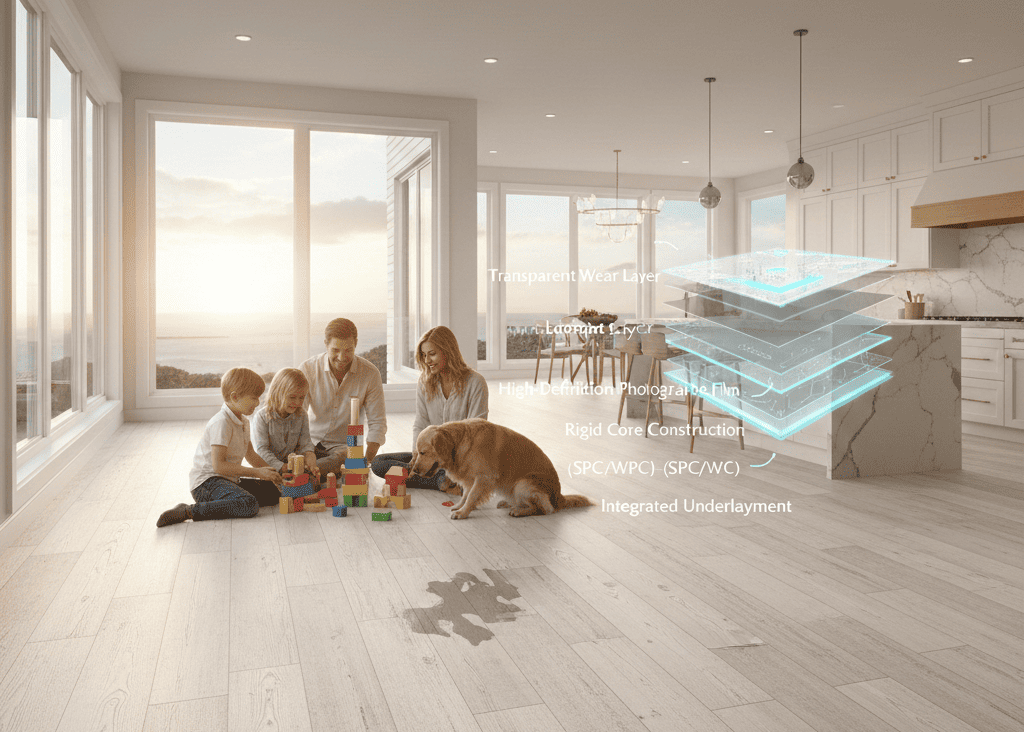
To truly appreciate why this material is a top-tier choice for home improvement, you need to look under the surface. LVP is not just a piece of plastic, it is a sophisticated piece of engineering consisting of several distinct layers that work in harmony.
The Transparent Wear Layer
The top layer is the transparent wear layer, which is your floor’s first line of defense. This coating protects the underlying design from scratches, scuffs, and stains. When we talk about flooring durability, the thickness of this layer, measured in mils, is the most critical factor for longevity in high-traffic areas.
The High-Definition Photographic Film
Below the wear layer lies the decorative print. This is where the magic happens, as advanced printing technology creates hyper-realistic visuals. You can find LVP that looks like white oak, reclaimed barn wood, or even exotic walnut, complete with knots and grain patterns that feel authentic to the touch.
The Rigid Core Construction (SPC vs. WPC)
The “engine” of the plank is the core. Most premium installations today use SPC (Stone Plastic Composite) or WPC (Wood Plastic Composite). SPC is denser and more resistant to impacts, while WPC offers a bit more resilience and warmth underfoot, making it comfortable for long periods of standing.
The Integrated Underlayment
Many high-quality planks come with a pre-attached cork or foam backing. This serves as a built-in underlayment, which provides sound dampening and thermal insulation. It effectively reduces the “clicky” sound often associated with older laminate floors, ensuring a quiet and solid feel throughout your home.
Comparison of LVP Core Types
| Feature | SPC (Stone Plastic Composite) | WPC (Wood Plastic Composite) |
| Core Material | Limestone and Stabilizers | Wood Flour and Foaming Agents |
| Rigidity | Ultra-High / Dent Resistant | Moderate / Slightly Flexible |
| Comfort | Firm and Solid | Softer and Warmer |
| Best For | High-Traffic / Commercial | Residential Bedrooms / Living Areas |
| Thickness | Generally Thinner (4mm – 7mm) | Generally Thicker (5mm – 12mm) |
Why Homeowners Are Switching to Luxury Vinyl Plank in 2026
As we move through 2026, the shift toward waterproof materials has accelerated. Homeowners are no longer willing to sacrifice style for functionality. The primary reason for the LVP boom is its 100% waterproof nature, which allows for a seamless flooring flow from the living room straight into the kitchen and bathrooms.
Beyond being waterproof, the installation versatility is unmatched. Because it is a “floating floor” system using a click-lock mechanism, it can often be installed over existing subfloors or even old tile, saving significant time on demolition and labor. This makes it an efficient choice for quick but high-impact renovations.
Another significant factor is the VOC emissions profile. Modern LVP brands have made massive strides in indoor air quality, offering FloorScore certified products that ensure your home remains healthy and free of harmful chemicals. This is a vital consideration for families with children or pets spending time on the floor.
Performance in the Connecticut Climate
Living in coastal towns like Norwalk or Westport means dealing with specific environmental challenges. Wood floors are hygroscopic, meaning they expand and contract with moisture. LVP, however, is far more dimensionally stable. It does not “cup” or “crown” when the humidity spikes in July.
For homes near the water, such as those in Rowayton or Old Greenwich, the threat of moisture is constant. LVP acts as a barrier, providing peace of mind during seasonal shifts. It is also compatible with radiant heating systems, a popular feature in luxury CT homes to keep things cozy during the snowy months of January and February.
Furthermore, the resilience of the material against salt and sand is a huge plus. If you are coming back from a walk at Compo Beach, you don’t have to worry about a few grains of sand ruining your floor’s finish. A simple microfiber mop is usually all it takes to maintain that brand-new look.
Essential Maintenance Tips for Your New Vinyl Floors
Maintaining LVP is significantly easier than refinishing hardwood, but it still requires a specific touch to ensure it lasts for decades. The goal is to preserve the wear layer so the photographic film remains protected. Avoiding harsh chemicals is the first rule of thumb for any flooring contractor worth their salt.
Daily and Weekly Cleaning Routine
Dust and grit act like sandpaper under your feet. We recommend a quick sweep or vacuum with a soft brush attachment every few days. For mopping, use a pH-neutral cleaner specifically formulated for vinyl. Avoid “mop and shine” products, as they can leave a waxy buildup that dulls the appearance over time.
Preventing Scratches and Dents
Even though LVP is tough, it is not indestructible. Use felt protectors under all furniture legs, especially heavy pieces like dining tables or sofas. When moving appliances, always use a plywood path or a specialized dolly to prevent gouging the surface. These small steps go a long way in protecting your investment.
Managing Sunlight Exposure
In rooms with large, floor-to-ceiling windows, intense UV rays can eventually cause slight fading. Utilizing curtains or UV-resistant window films can help protect the vibrancy of the wood-look patterns. High-end LVP often includes UV inhibitors in the wear layer, but extra protection never hurts in sun-drenched areas.
Choosing the Right Aesthetic for Your Space
The design possibilities with Luxury Vinyl Plank are virtually endless in 2026. Whether your home is a mid-century modern in New Canaan or a classic colonial in Fairfield, there is an LVP style that complements your architecture perfectly.
Wide Plank vs. Narrow Plank
Wide planks (7 inches or more) are currently trending because they make small rooms feel larger and provide a more contemporary, clean look. Narrower planks, on the other hand, offer a more traditional, “strip” hardwood appearance that fits well with historic or rustic home designs.
Embossed-in-Register (EIR) Technology
If you want the most realistic look possible, look for EIR (Embossed-in-Register). This manufacturing process aligns the physical texture of the plank with the printed wood grain. When you see a knot in the wood, you can actually feel the dip in the surface, creating an incredible tactile experience.
Multi-Tonal Color Palettes
Gone are the days of flat, monochromatic floors. Modern LVP features high color variance, where different planks have slightly different shades. This mimics the natural diversity of real timber, ensuring that no two sections of your floor look identical, which adds to the “authentic” illusion.
Luxury Vinyl Plank vs. Other Flooring Materials
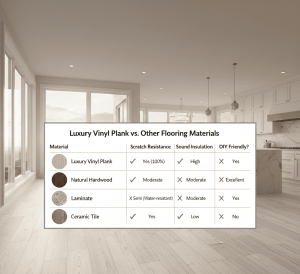
It is helpful to compare LVP against its main competitors to see where it truly shines. While we love hardwood installation, it isn’t always the right fit for every room or every budget. Understanding the trade-offs helps you make an informed decision for your long-term property value.
LVP vs. Laminate
Laminate has improved over the years, but it is primarily made of wood byproducts (HDF), which means it can swell if exposed to water. LVP is entirely synthetic, making it the clear winner for basements, bathrooms, and laundry rooms where spills are inevitable.
LVP vs. Hardwood
Hardwood offers timeless value and can be sanded many times, but it is susceptible to scratches from pets and damage from moisture. LVP provides the look of wood with far more impact resistance and zero need for future sanding or refinishing.
LVP vs. Porcelain Tile
Tile is incredibly durable and waterproof, but it is also cold, hard on the joints, and requires grout maintenance. LVP is warmer to the touch, offers more “give” when walking, and does not involve messy grout lines that can discolor over time.
Material Performance Scorecard
| Material | Waterproof? | Scratch Resistance | Sound Insulation | DIY Friendly? |
| Luxury Vinyl Plank | Yes (100%) | High | Excellent | Yes |
| Natural Hardwood | No | Moderate | Moderate | No |
| Laminate | Semi (Water-resistant) | High | Moderate | Yes |
| Ceramic Tile | Yes | High | Low | No |
Technical Considerations for a Flawless Installation
If you are considering a renovation, there are a few technical hurdles to keep in mind. The most common cause of LVP failure is not the material itself, but poor subfloor preparation. Even a minor “hump” or “dip” in the concrete or plywood underneath can cause the click-lock joints to separate over time.
Before laying down a single plank, the floor must be clean, dry, and flat within very strict tolerances. Sometimes this requires a self-leveling compound or grinding down high spots. A professional team like Delucio LLC carefully inspects the subfloor to ensure the final product looks like a seamless sheet of wood.
Acclimatization is also important. Even though vinyl doesn’t shrink like wood, the planks should still sit in your home for 48 hours before installation. This allows the material to reach the same temperature as the room, preventing any minor expansion issues after the floor is locked into place.
The Financial and Aesthetic ROI of LVP
In the competitive Fairfield County real estate market, flooring plays a massive role in how quickly a home sells. High-end LVP is now recognized by appraisers as a quality finish, especially in lower levels or high-traffic areas. It offers a clean, uniform look that buyers love.
Investing in professional installation ensures that the transition strips, baseboards, and quarter-round moldings are finished perfectly. These details are what separate a “DIY look” from a professional, high-value renovation. When your floors look expensive and are easy to maintain, it adds a level of “move-in readiness” that is highly desirable.
Sustainable Flooring Choices and Eco-Friendly LVP
As we prioritize sustainability in 2026, many homeowners ask about the environmental impact of vinyl. The good news is that many top-tier LVP products are now made with recycled content and are themselves 100% recyclable at the end of their lifespan.
By choosing products with low VOC emissions and ortho-phthalate-free construction, you are ensuring a safer environment for your family. Furthermore, because LVP lasts so long, it doesn’t need to be replaced as often as cheaper carpets or low-end laminates, which reduces waste in our local CT landfills.
Expert Guidance for Your Next Flooring Project
Choosing between modern tones like “Weathered Oak,” “Coastal Grey,” or “Espresso” can be overwhelming. Working with an experienced flooring contractor who understands the specific design trends of Greenwich and Stamford is invaluable, as we see what performs best in Fairfield County homes every day.
To ensure your 2026 LVP installation delivers the perfect balance of style and performance, we focus on:
Technical Specification: We help you navigate wear layer thickness and core stability to find the right product for your home’s traffic levels.
Professional Execution: From the initial subfloor measurement to the final piece of trim, our meticulous process ensures a waterproof and durable finish.
Localized Design: Our team stays updated on the latest 2026 collections, ensuring your floor reflects current aesthetic standards while maintaining long-term value.
Don’t leave your renovation results to chance. Contact us today to see samples of the latest collections or call us directly to schedule your consultation and professional estimate: (475) 284-8583.
Expert Vinyl Plank Flooring Installation Near You
Upgrading your home’s interior with premium LVP requires a partner who understands both the technical requirements and the architectural styles of Connecticut. Delucio LLC provides professional installation services across multiple communities, delivering high-end results that transform your living space.
If you are located in one of the areas below, explore our dedicated service pages to learn more about our specialized techniques:

