

Decoding the Innovation of in 2026
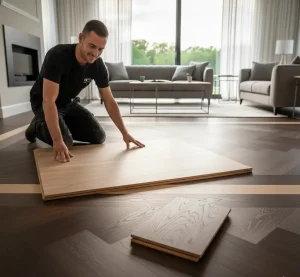
If you are planning a renovation in Fairfield County, you have likely heard the term engineered wood flooring more than once. But what exactly is it? Many homeowners mistakenly confuse it with laminate, but the reality is far more sophisticated. In 2026, this material has become the premier choice for Connecticut residences due to its incredible stability and authentic beauty.
Engineered wood is a high-performance flooring solution consisting of a real hardwood veneer bonded over multiple layers of structural backing. This cross-grain construction is not just a manufacturing choice, it is an engineering feat designed to counteract the natural movement of timber.
While solid wood expands and contracts significantly with the humid summers and dry winters of the Northeast, engineered planks remain remarkably flat. This makes them the ideal candidate for modern homes in Greenwich and Darien, where luxury meets the technical necessity of durable, long-lasting materials.
Choosing this material means you are opting for the look and feel of traditional hardwood but with a structural “backbone” that handles the challenges of coastal living. It is a marriage of nature and technology that provides a seamless aesthetic across your entire floor plan.
The Core Anatomy of an Engineered Plank
To understand the value, we have to look under the surface. A premium engineered plank is composed of a wear layer, which is the visible, high-quality timber (like White Oak or Walnut). Below this sits the core, usually made of high-density fiberboard or cross-laminated plywood.
This layered approach is why a flooring contractor like Delucio LLC often recommends it. The layers are glued together under high pressure, creating a bond that is stronger than the wood itself, ensuring that your investment stays beautiful for decades.
Real Wood vs. Synthetic Alternatives
It is crucial to note that engineered wood is 100% real wood. Unlike laminate or LVP (Luxury Vinyl Plank), which use a printed image of wood grain, engineered flooring features the unique knots, burls, and textures of a living tree.
In the 2026 market, authenticity is everything. Homeowners want the prestige of a natural material without the maintenance headaches of old-world solid planks, and that is exactly where this product shines.
How It Is Made: The Precision Manufacturing Process
The transformation from a raw log to a finished engineered hardwood plank is a fascinating journey of precision. In 2026, manufacturing standards have reached a point where the quality of the bond and the accuracy of the milling are near-perfect.
The process begins with the selection of the hardwood lumber. Once the logs are harvested, they are processed using specific cutting techniques that determine the final look of the veneer.
Step 1: Harvesting the Wear Layer (The Lamella)
The top layer, or “lamella,” can be cut in three different ways. Dry-sawn is the most premium method, as it mimics the look of solid wood by cutting the veneer directly from the log. Sliced-peeled and rotary-peeled are other methods, though dry-sawn remains the favorite for high-end Norwalk and Westport homes.
The thickness of this wear layer is vital. A thicker layer, typically ranging from 3mm to 6mm, allows the floor to be sanded and refinished multiple times, effectively giving the floor the same lifespan as a solid wood counterpart.
Step 2: Constructing the Multi-Ply Core
While the top is being prepared, the core is built. Manufacturers use alternating layers of wood, running the grain of each layer perpendicular to the one above it. This cross-laminated technology is the secret to the floor’s dimensional stability.
By offsetting the grain, the wood’s natural tendency to swell or shrink is “locked” in place. This is why you can install engineered wood in basements or over radiant heating systems, locations where solid wood would likely fail.
Step 3: Bonding and Pressing
The wear layer and the core are joined using advanced, low-VOC adhesives. They are placed in large presses that use heat and immense pressure to fuse the layers into a single, monolithic unit. This ensures that the layers will never delaminate, even under the stress of Connecticut’s seasonal climate shifts.
Final Milling and Finishing
Once the planks are pressed, they are milled with tongue-and-groove or “click-lock” profiles for easy installation. Finally, they are either left raw for site-finishing or coated with factory-applied UV-cured oils or polyurethanes for maximum durability.
Technical Benefits: Why Stability Matters in Connecticut
The geography of Fairfield County presents unique challenges for wood. We deal with high humidity from the Sound and intense interior heating in the winter. Engineered wood is designed specifically to thrive in these conditions.
| Feature | Solid Hardwood | Engineered Hardwood |
| Moisture Resistance | Moderate (prone to gaps) | High (very stable) |
| Installation Levels | Grade and above only | All levels (including basements) |
| Radiant Heat Comp. | Not recommended | Excellent |
| Plank Widths | Limited (to prevent cupping) | Up to 12″ or wider |
| Eco-Friendliness | One log = fewer planks | One log = more veneers |
Wide Plank Capabilities Without the Risk
In 2026, the trend for wide-plank flooring (8 inches to 12 inches) is dominating interior design. In solid wood, these widths are risky because the wider the board, the more it moves.
Engineered construction allows you to have those massive, grand planks in your New Canaan or Wilton living room without worrying about unsightly gaps appearing in the winter. It provides the “modern-farmhouse” or “coastal-chic” look with total peace of mind.
Compatibility with Modern Heating
Many new luxury builds in Stamford and Fairfield utilize radiant floor heating. Solid wood acts as an insulator and can crack when heated from below. Engineered wood, being thinner and more stable, allows heat to transfer efficiently into the room while resisting the drying effects of the heat source.
Sustainability and Environmental Impact in 2026
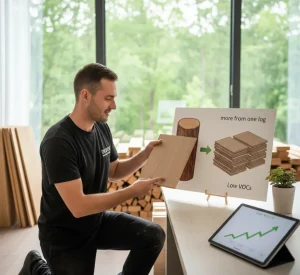
As we become more conscious of our environmental footprint, engineered wood flooring stands out as a more sustainable option than solid timber. The way it is manufactured allows us to stretch our natural resources further.
Getting More from Every Tree
Because only the top layer is made of the “prime” slow-growing hardwood, one log can produce significantly more square footage of flooring than it could if it were cut into solid planks. The core is often made from faster-growing, sustainable wood species, making the overall carbon footprint of the floor much lower.
Indoor Air Quality and VOCs
At Delucio LLC, we prioritize your health. The adhesives used in modern engineered wood are strictly regulated. In 2026, we focus on formaldehyde-free and low-emission products that ensure the air in your home stays clean, which is especially important for households with children or allergies.
The Installation Process: A Roadmap to Perfection
Transforming your home with engineered wood is a precise operation. While the material is stable, the installation must be handled by a professional flooring specialist to ensure the warranty remains valid and the finish is flawless.
Subfloor Assessment and Levelling
Even the best engineered floor will fail on a poor subfloor. We start by ensuring the concrete or plywood base is “flat within tolerance.” We use self-levelling compounds if necessary to create a perfect foundation.
Moisture Barrier and Underlayment
In areas like Rowayton or Westport, moisture from the ground can be an issue. We install a high-quality moisture barrier and underlayment that provides sound dampening and a soft feel underfoot. This “floating” or “glue-down” method provides a quiet, solid-feeling floor.
The Final Reveal
Once the planks are laid, we install the baseboards and transitions. If the floor was site-finished, we apply the custom stain and protective coats using our dustless sanding system, ensuring your home stays pristine throughout the process.
Frequently Asked Questions
Can engineered wood be refinished?
Yes! As long as the wear layer is at least 3mm thick, it can be sanded and refinished. Most high-end products we use at Delucio LLC can be refinished 2 to 3 times over their lifespan.
Is it waterproof?
While it is much more water-resistant than solid wood, it is not “waterproof” like vinyl. However, its high stability means it can handle occasional spills in a kitchen far better than traditional hardwood.
How do I clean my engineered floors?
Stick to a dry microfiber mop for daily dust and a damp (not wet) mop with a specialized wood cleaner for deeper cleans. Avoid steam mops, as the heat and moisture can eventually weaken the adhesive bonds.
Delucio LLC: Your Local Engineered Wood Experts
Choosing the right floor is a big decision, and you don’t have to make it alone. At Delucio LLC, we combine technical expertise with a passion for beautiful interiors. We understand the nuances of wood science and how to apply them to the unique homes found across Fairfield County.
Whether you are looking for the modern elegance of wide-plank White Oak or the classic warmth of Walnut, we provide a high-level flooring service that focuses on quality, cleanliness, and durability. Let us help you navigate the options and find the perfect engineered solution for your 2026 home project.
Ready to Upgrade Your Space?
Experience the perfect blend of beauty and stability. Contact Delucio LLC today to discuss your vision and see why engineered wood is the smart choice for your home.
For a consultation or a free estimate, visit our contact page.
Call Our Team Now: (475) 284-8583
Local Service Areas for Engineered Wood Flooring:
Click below to find our specialized services in your city:

