
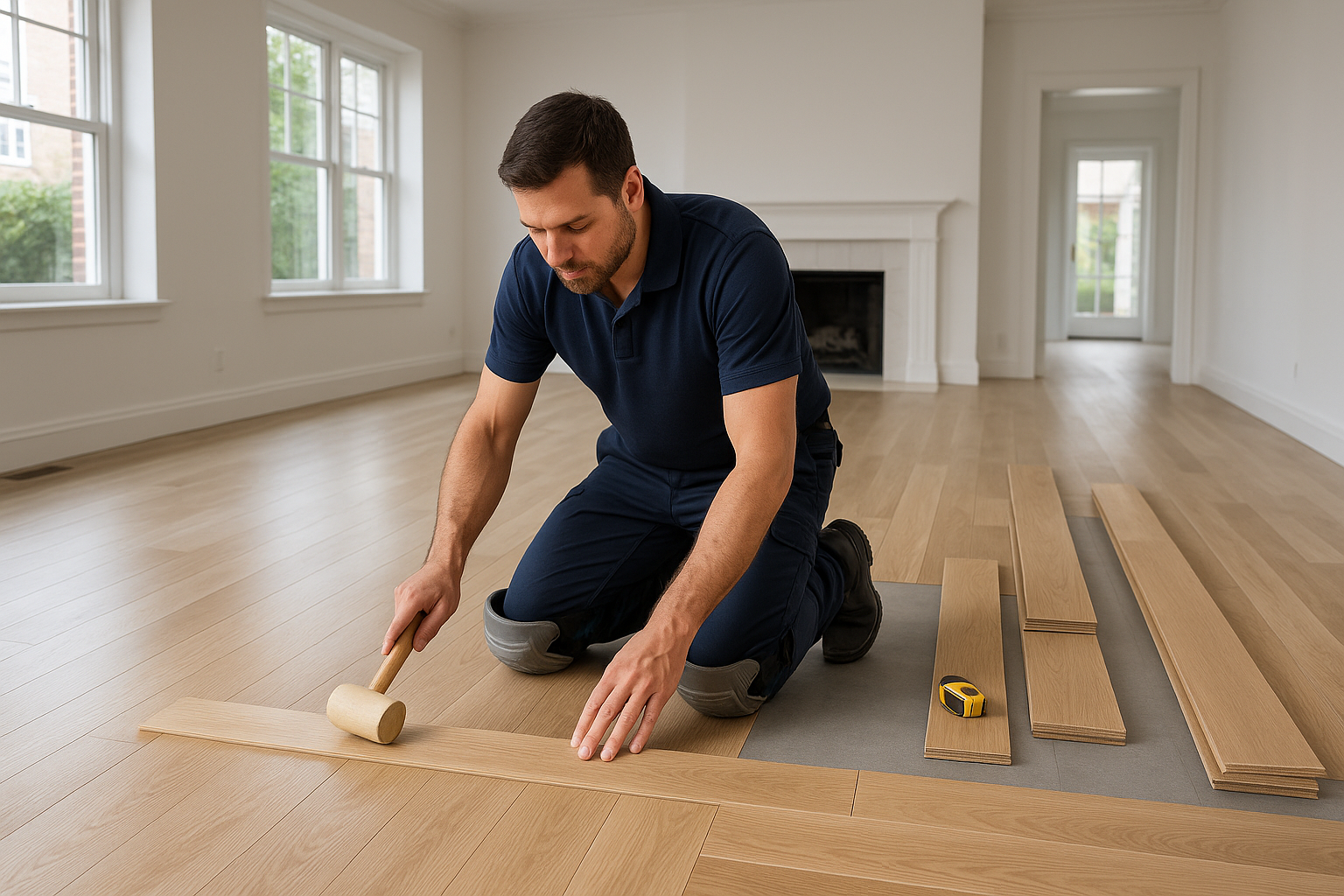
Why Hardwood Floor Care Looks Different in Port Chester
Port Chester sits just off Long Island Sound, where summer humidity often climbs past 70 percent while winter heating pulls indoor air below 30 percent. That swing is hard on solid oak and engineered planks alike, causing tight gaps in January and cupping in July. Many homes here still carry their original wood floors, and they can last generations with the right care. This guide covers cleaning routines, humidity control, scratch prevention, and knowing when to recoat, so your floors hold up to Westchester’s seasons.
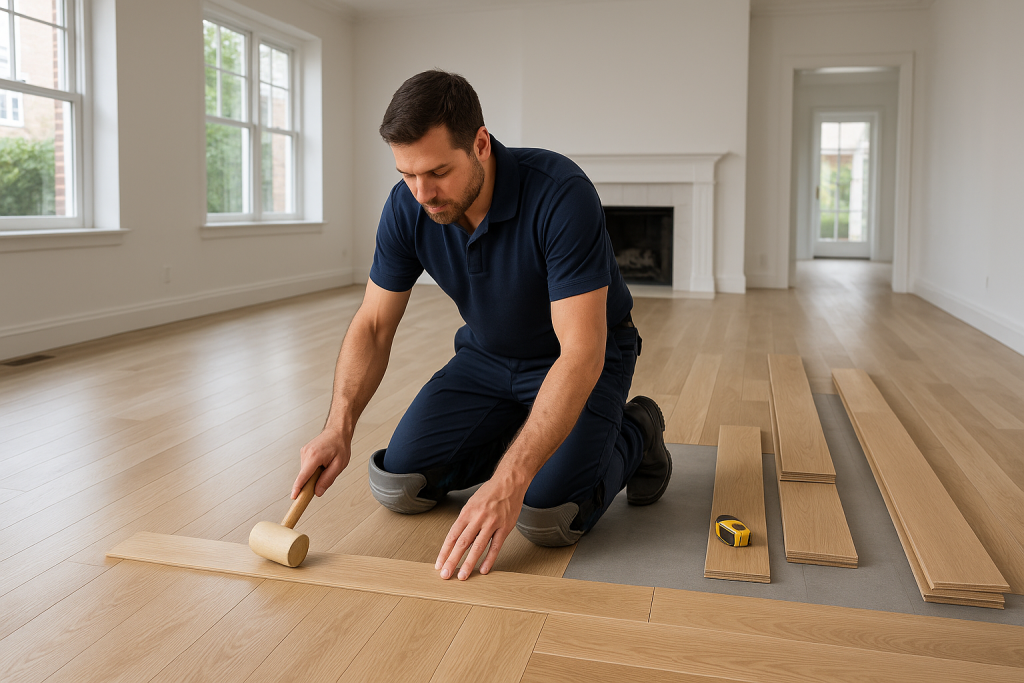
How Port Chester’s Climate Puts Hardwood Floors to the Test
Wood is a living material long after it leaves the mill. It absorbs moisture from humid air and releases it when the air dries out, expanding and contracting with every season. In our corner of Westchester County, that cycle is more aggressive than in drier inland regions because of the moisture rolling off the Sound.
During a coastal summer, boards swell and press against each other. When winter heating kicks in, they shrink and pull apart, opening thin lines between planks. Homeowners often notice these seasonal gaps and worry the floor is failing. In most cases it is simply responding to the humidity difference, and the gaps close again when spring returns.
In Port Chester and nearby shoreline towns, salt-laden air and winter road treatments create an added problem. Salt granules tracked indoors are abrasive and slightly corrosive to certain finishes. That regional factor means entry protection and frequent dry cleaning carry more weight here than they would for a home in a dry mountain climate.
The Freeze-Thaw and Heating Season Effect
Once the furnace runs steadily from late fall through early spring, indoor relative humidity can drop into the 20s. Bare wood loses moisture fast at those levels, and that is when hairline cracks, gapping, and loose board edges tend to appear.
We see this pattern across older housing stock throughout the region. Homes in Greenwich and Stamford built before 1950 often carry narrow-strip oak that reacts strongly to dry heat, which is why humidity control matters as much as any cleaning product. The same physics that governs a fresh Hardwood Floor Installation also governs how a decades-old floor behaves each winter.
- Summer: high humidity, board swelling, potential cupping near kitchens and baths.
- Winter: dry heated air, board shrinkage, visible gapping and squeaks.
- Shoulder seasons: the most stable period, ideal for recoating and repairs.
Building a Cleaning Routine That Protects the Finish
The single most effective thing you can do for hardwood is keep grit off it. Fine sand, salt, and street dirt work like a mild abrasive underfoot, dulling the finish long before the wood itself wears down. A consistent routine handles most of that damage before it starts.
Think of maintenance in three layers: frequent dry cleaning, periodic damp cleaning, and occasional deeper attention. Each layer targets a different type of buildup, and skipping the first is what leads to premature dullness.
Your Weekly and Monthly Rhythm
For high-traffic zones like hallways, kitchens, and the path from your entry, dry clean two to three times a week. For the whole floor, a light damp clean every one to two weeks keeps residue from accumulating.
- Several times a week: dust mop or vacuum with a bare-floor setting, no beater bar.
- Every one to two weeks: damp clean with a hardwood-specific cleaner and a well-wrung microfiber pad.
- Monthly: inspect high-wear areas, entry points, and under rugs for early dulling or scratches.
- Seasonally: check humidity readings and adjust your humidifier or dehumidifier.
One of the most common mistakes we see is wet mopping hardwood the way people mop tile. It looks clean for a few weeks, then the seams turn cloudy and the finish starts to lift at the board edges. Standing water is the enemy. A pad should feel barely damp to the touch, never dripping.
Handling Spills and Sticky Messes
Wipe liquid spills the moment they happen. Water, pet accidents, and drink spills that sit on the surface can penetrate the finish at seams and reach the wood, leaving gray or black staining that only sanding can remove.
For sticky residue, dampen the spot with a hardwood cleaner and wipe rather than scrape. Metal scrapers and abrasive pads gouge the finish. This same gentle discipline protects a newly completed Hardwood Floor Installation during its first vulnerable months, when the finish is still reaching full hardness.
Choosing the Right Products and What to Never Use
The wrong cleaner does slow, cumulative damage that is easy to miss until the floor needs refinishing years early. Many popular household products are simply not made for sealed wood, even when the label suggests they are safe for all surfaces.
Use a cleaner formulated specifically for hardwood and matched to your finish type. pH-neutral formulas clean without stripping or clouding the protective coat. Everything else is a gamble.
Products That Damage Wood Floors
Vinegar and water is the classic offender. The acidity slowly etches polyurethane, leaving a hazy, worn look that no amount of buffing fully restores. Oil soaps leave a residue that builds up, attracts dirt, and interferes with future recoating.
| Product | Safe for Hardwood? | Why It Matters |
|---|---|---|
| pH-neutral hardwood cleaner | Yes | Cleans without stripping or dulling the finish |
| Vinegar and water | No | Acidity etches and clouds polyurethane over time |
| Oil-based soap | No | Leaves residue that blocks recoating and traps grime |
| Steam mop | No | Forces heat and moisture through finish seams |
| All-purpose spray cleaner | No | Often alkaline or waxy, degrades the protective coat |
The finish type on your floor determines the safe cleaner. A wax-finished floor cannot take water-based cleaners, while a polyurethane surface should never be waxed. Rushing to grab whatever is under the sink is how finishes get compromised. Reading the finish first, then matching the product, is what separates careful upkeep from slow damage.
A Note on Wax and Polish Buildup
Acrylic waxes and refresher polishes promise instant shine but often create a cloudy, streaked layer that yellows and complicates any future recoat. When we prep floors for a screen and recoat across Darien and Norwalk homes, stripping old polish buildup frequently adds the most labor. If you want lasting shine, the finish itself should provide it, not a topical product.
Managing Indoor Humidity Through the Seasons
Humidity control is the quiet half of hardwood maintenance, and the part most homeowners overlook. You can clean perfectly and still see gapping, cupping, and cracking if the air in your home swings too far in either direction.
The target is simple: keep indoor relative humidity between 35 and 55 percent all year. Wood installed and acclimated at that range stays dimensionally stable. Push outside it for long stretches and the boards move.
Winter: Fighting Dry Heated Air
From roughly November through March, forced-air heat drives indoor humidity down fast. Boards shrink, gaps open, and you may hear new squeaks. A whole-home or room humidifier keeps levels from crashing into the danger zone.
The step that people rush is acclimation and humidity stabilization, and rushing it causes lasting gaps. Wood needs consistent conditions, not a humidifier that runs one week and sits off the next. Set a target, use an inexpensive hygrometer, and hold the range.
| Season | Typical Indoor Risk | Recommended Action |
|---|---|---|
| Winter | Very dry air, gapping | Run a humidifier, aim for 35 to 45 percent |
| Summer | High humidity, cupping | Use AC or dehumidifier, aim for 45 to 55 percent |
| Spring / Fall | Generally stable | Monitor, ideal window for recoating |
Summer: Controlling Coastal Moisture
In Port Chester’s humid summers, air conditioning does double duty by pulling moisture out of the air. Basements and ground-floor rooms near the Sound may need a dedicated dehumidifier. In Fairfield and Westport, where many homes sit close to the shoreline, we regularly see summer cupping in kitchens and sunrooms that trace straight back to unmanaged humidity rather than any flaw in the floor. The same care applies whether the wood is original or a recent Hardwood Floor Installation.
Preventing Scratches, Dents, and Everyday Wear
Most hardwood damage is not dramatic. It is the slow accumulation of small scratches, chair scuffs, and grit abrasion that dulls a floor over years. The good news is that nearly all of it is preventable with a few habits.
Protection starts at the door and continues under every piece of furniture. The goal is to keep abrasive material off the surface and to spread out the pressure of heavy objects.
Entry Protection and Furniture Care
Place mats at every exterior entry to catch sand, salt, and grit before it reaches the wood. A no-shoes habit indoors dramatically cuts down on abrasion, especially through winter when salted sidewalks coat every sole.
- Felt pads under all furniture legs, checked and replaced as they wear thin.
- Area rugs in high-traffic paths and pivot points, using breathable rug pads.
- Entry mats inside and outside each door to trap grit and moisture.
- Trimmed pet nails to limit the fine scratching that dulls the finish in play zones.
Homeowners often ask whether they really need felt pads if they rarely move their furniture. The honest answer is yes. Even a chair pushed back a few inches a day drags grit across the finish thousands of times a year. That is exactly where the finish thins first.
Rugs, Runners, and Sunlight
Rugs protect traffic lanes, but a rug that never moves can also create an uneven tan line as the exposed wood around it shifts color under sunlight. Direct sun fades and ambers wood over time, so rotating rugs and using window coverings during peak sun keeps the tone even. This matters most in bright, south-facing rooms common in New Canaan and Wilton houses, and it applies equally to any protected finish from a professional Hardwood Floor Installation.
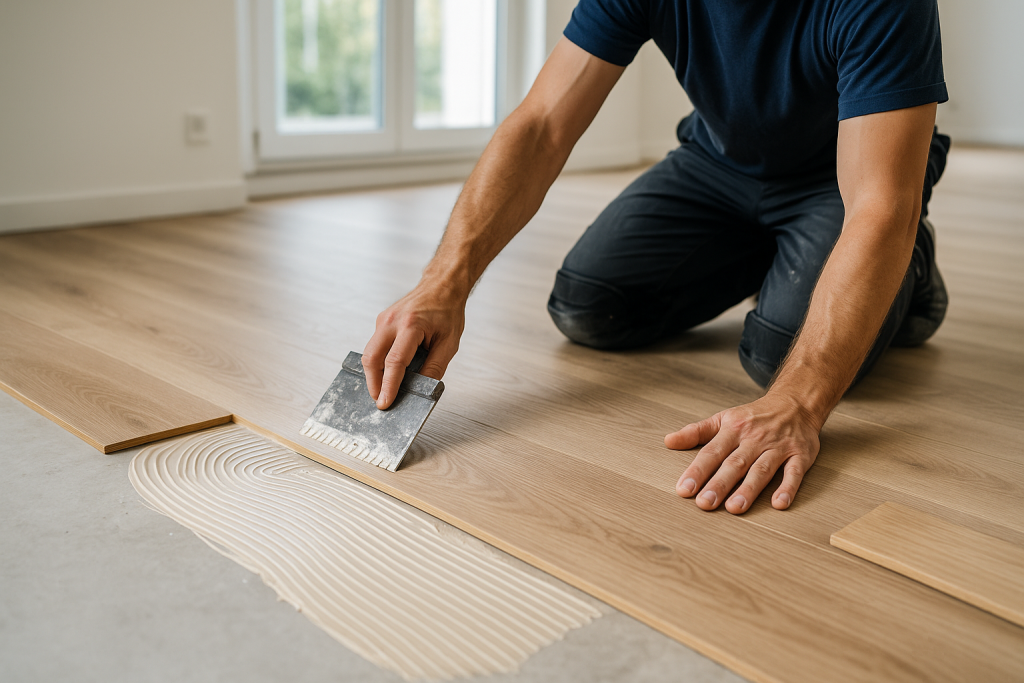
Recoating and Refinishing: Knowing When It Is Time
No finish lasts forever, but you can stretch its life for decades if you act at the right moment. The key is understanding the difference between renewing the finish and rebuilding the floor.
A screen and recoat abrades the existing finish lightly and adds a fresh protective coat. A full sand and refinish removes the old finish down to bare wood and starts over. One is quick and affordable relative to the other, and catching wear early is what keeps you in recoat territory.
Reading the Warning Signs
The water-drop test is the fastest check. Put a few drops of water on a worn-looking area. If it beads, the finish is intact. If it soaks in within a minute or two, the protective coat is failing and the wood is exposed to moisture.
| Condition | What It Means | Likely Fix |
|---|---|---|
| Dull, scuffed surface, no bare wood | Finish is worn but wood is protected | Screen and recoat |
| Water soaks in quickly | Finish no longer sealing the wood | Recoat soon, before staining starts |
| Gray or black staining | Moisture has reached the wood | Sand and refinish |
| Deep scratches through the grain | Damage past the finish layer | Sand and refinish |
One of the most common mistakes we see is waiting too long. A floor that only needed a recoat gets ignored for a couple more years, the finish wears through, foot traffic grays the raw wood, and now the only option is a full sanding. Recoating on schedule is the cheaper path every time.
Timing the Work
Spring and fall are the ideal windows for recoating and refinishing in our region, since humidity is most stable and the finish cures predictably. We handle this work throughout lower Westchester and across the Connecticut line in towns like Weston, where older homes benefit from periodic recoats between the bigger refinishing jobs. A well-timed recoat can also protect the investment of a recent Hardwood Floor Installation for many years.
Matching Care to Your Floor Type and Finish
Not every hardwood floor wants the same care. Solid and engineered wood behave differently with moisture, and oil-based and water-based finishes ask for different upkeep. Knowing which you have prevents well-meaning mistakes.
If you are unsure, a quick professional look settles it. But a few visual and behavioral clues can point you in the right direction while you decide.
Solid Versus Engineered Hardwood
Solid wood is a single piece of hardwood throughout, so it moves more with humidity but can be sanded and refinished many times. Engineered wood layers a real wood veneer over a stable plywood core, so it resists seasonal movement better but has a thinner wear layer with limited refinishing life.
- Solid hardwood: more humidity movement, multiple refinishes possible over its lifetime.
- Engineered hardwood: more dimensional stability, fewer or no full refinishes.
In coastal Westchester and along the shoreline, engineered products are a frequent choice for lower levels and rooms with more moisture exposure, precisely because they hold their shape through humid summers. The right choice often comes up during a new Hardwood Floor Installation consultation, where the room’s conditions guide the decision.
Oil-Based Versus Water-Based Finishes
The finish on top dictates your cleaning approach and how the floor ages. Water-based polyurethane dries clear and keeps a lighter tone, while oil-based polyurethane ambers over time and adds warmth. Penetrating oil finishes soak into the wood rather than sitting on top, and they call for their own specialized care products.
| Finish Type | Look Over Time | Care Notes |
|---|---|---|
| Water-based polyurethane | Stays clear and light | pH-neutral cleaner, no wax |
| Oil-based polyurethane | Warms and ambers | pH-neutral cleaner, longer cure time |
| Penetrating oil / hardwax oil | Natural matte look | Manufacturer-specific cleaner and refresh oil |
The step that gets rushed with any finish is cure time. A floor can feel dry to the touch within a day, but a polyurethane finish needs weeks to fully harden. Putting rugs back down or moving heavy furniture too soon traps the finish and leaves marks that only refinishing removes. We guide this timing on every project across Norwalk and the surrounding towns, whether it is a recoat or a fresh Hardwood Floor Installation.
FAQ: Common Questions About Hardwood Floor Maintenance
How often should I clean my hardwood floors in Port Chester?
Dust mop or vacuum high-traffic areas two to three times a week, and give the whole floor a light cleaning with a hardwood-specific product every one to two weeks. In coastal Westchester, sandy grit tracked in from beaches and salted winter sidewalks acts like sandpaper, so frequent dry cleaning matters more here than in drier inland areas.
Can I use a steam mop on my hardwood floors?
No. Steam mops force heat and moisture into the wood and through seams in the finish. Over time this causes cupping, a cloudy finish, and separation between boards. Even sealed floors are not designed for steam. Stick to a barely damp microfiber pad with a cleaner made for hardwood, and dry any excess right away.
How do I know when my floors need refinishing versus a recoat?
If the wear is only in the finish, with no gray or black staining reaching the bare wood, a screen and recoat usually restores the surface. Once you see raw wood, deep scratches through to the grain, or gray water stains, the floor needs a full sand and refinish. A water-drop test that soaks in quickly signals a worn finish.
What indoor humidity level protects hardwood floors year round?
Aim to keep indoor relative humidity between 35 and 55 percent throughout the year. In Port Chester, that means running a humidifier during dry winter heating months and a dehumidifier or air conditioning through humid summers. Stable humidity prevents the seasonal gapping and cupping that damage boards and loosen finishes.
Key Takeaways for Long-Lasting Wood Floors
Hardwood floors in Port Chester face a real test from coastal humidity and dry winter heat, but the care that protects them is straightforward once you understand the why behind each step. Keep grit off the surface, use the right cleaner for your finish, and hold your indoor humidity steady across the seasons.
Protect against scratches at the door and under furniture, and watch for the early signs of a worn finish so you can recoat before a full refinish becomes the only option. Match your routine to whether you have solid or engineered wood and to your finish type, and the floor will reward you with decades of service.
Most of this is prevention, and prevention is far cheaper than repair. A floor cared for consistently rarely needs the drastic work that neglected floors do. When it does come time for a recoat or refinish, catching it at the right moment keeps the job small.
Talk to Delucio LLC About Your Floors Before the Next Season
If your floors already show dulling in the walkways or gaps that widen every winter, the finish is telling you it needs attention now, before another humid summer pushes moisture into unprotected wood. Acting during a stable spring or fall window means the work cures properly and lasts longer. Waiting usually turns an affordable recoat into a full refinish.
When you reach out, we come to your home, look at the actual condition of the wood and finish, run a moisture and wear check, and give you a written estimate with a clear recommendation, recoat or refinish, so you are not guessing.
The visit takes under an hour, and there is no obligation to move forward. Call us today at +1 (475) 284-8583 or schedule a free estimate and we will find a time that works for you.
You can also read what other Westchester and Fairfield County homeowners say and confirm we are verified on Google before you call.
Find Trusted Hardwood Floor Services Near You in Connecticut
Delucio LLC serves Port Chester and the surrounding shoreline communities across the Connecticut line, where coastal humidity and older housing stock call for hands-on knowledge of how local floors behave. From new installations to recoats and refinishing, we tailor every project to your home’s conditions. Choose your town below to learn more about hardwood floor services in your area.

